
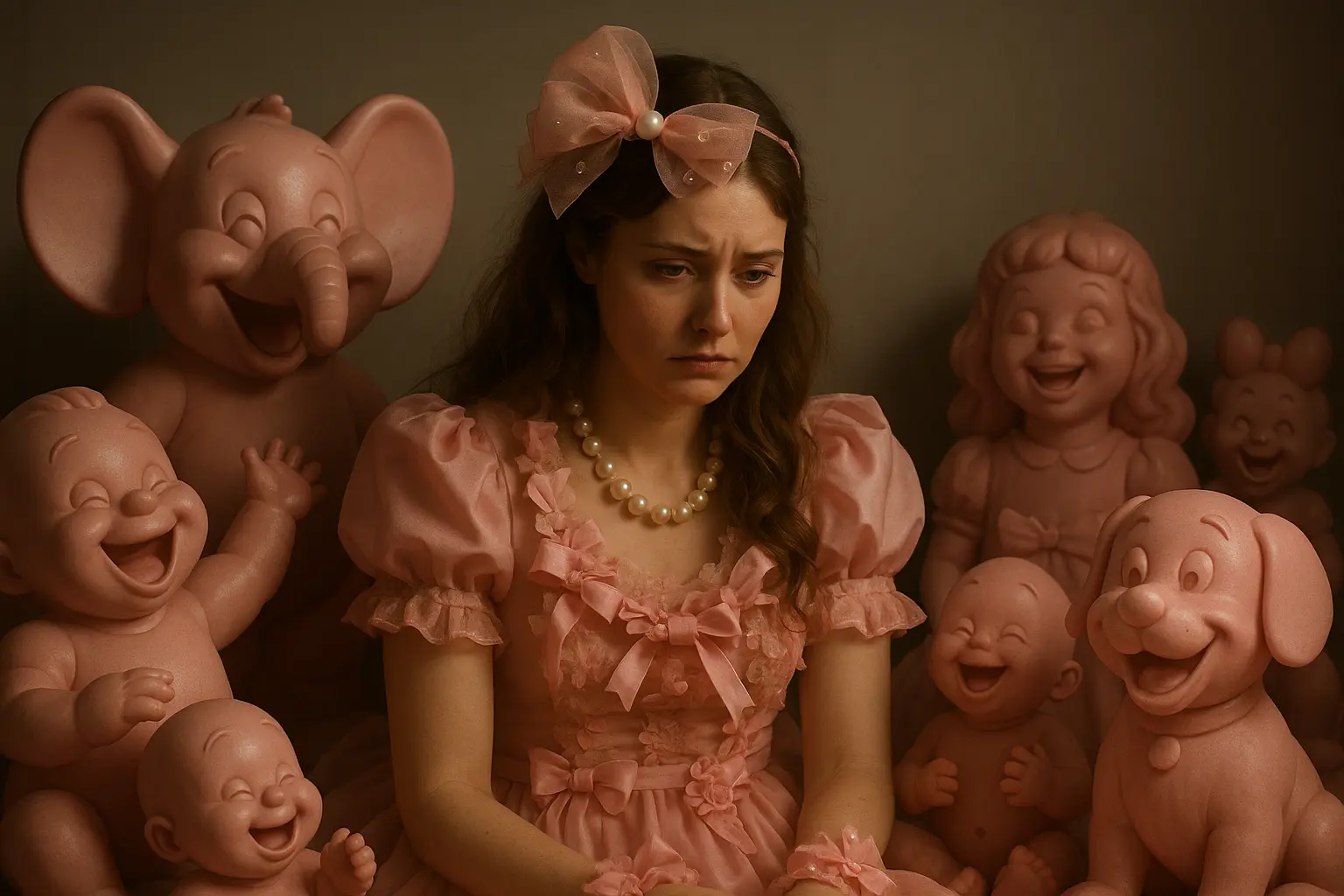
I was surfing the internet when I came across this video
, a short modern response to Henrik Ibsen’s “A Doll’s House”. I had read the play some time ago and also watched a live performance by the wonderful crew of Summer Light Theater.
The title of the video has been chosen carefully to indicate that it’s not a condensed representation of the original drama. On the contrary, it tries to picture the core idea behind the original drama in the modern setting. In Ibsen’s play, Nora’s decision to abandon her children stems from a deeper issue: her lack of identity and independence. In the final act, she reflects:
“That’s the way it has been, Torvald. When I was home with Daddy, he told me all his opinions, and so they became my opinions too. If I dis-agreed with him I kept it to myself, for he wouldn’t have liked that. He called me his little doll baby, and he played with me the way I played with my dolls. Then I came to your house”
“I mean that I passed from Daddy’s hands into yours. You arranged everything according to your taste, and so I came to share it—or I pretended to; I’m not sure which. I think it was a little of both, now one and now the other. When I look back on it now, it seems to me I’ve been living here like a pauper—just a hand-to-mouth kind of existence.”
“I have been your doll wife here, just the way I used to be Daddy’s doll child.”
These all show the real intention of Nora’s decision. She was concerned with lack of independence and personal identity. She was invisible in the societal hierarchy; therefore, she decided to leave her family to seek her own life, just to find out who she really is.
The modern version although it is completely something else. The modern Nora does the same and leaves her children, too, but the reasons are different. Some characteristics of the two versions are the same. Some are different, and lots of important details are gone! For example, the absence of the way her husband treats her or the concept of lying to her husband, all make this modern play an improper response in comparison to the original play. For example, in modern version she’s married and she has two kids, just like the original play. But the modern Nora is employed, socially visible, and financially independent. At the end, the movie pictures her leaving as a result of “burnout”, rather than pursuing her own identity.
Both versions strike me as troubling. Of course, couples part ways for many reasons. This is normal. But when children are involved, abandonment is not something that can be justified by gender differences, independence, or burnout. That part remains unacceptable. But the thing that caught my attention is the reasoning part of the two stories. In 1897, you needed a reason to abandon your children. With a reason, and a bit of biased looking because of gender differences, your abandonment could be considered “fine,” and you wouldn’t be the bad guy of the story. After all, there was a shame to the action, and you would have needed a reason to justify yourself. The modern era, however, seems to have discarded that need for a reason. The shame itself is gone. The modern narrative suggests that personal dissatisfaction or emotional exhaustion is reason enough. You don’t need a grand philosophical manifesto; you just need to not be happy. In that case you are free to do whatever you like. You don’t need reasons anymore. You don’t need to cover that shame with a mask. This is something that hits me hard and makes me think of the changes we’ve experienced within just 200 years.